

Views: 0 Author: Site Editor Publish Time: 2026-08-14 Origin: Site


Standard diaper sizes eventually fail. When babies exceed the 90th percentile in weight or height, parents face a frustrating cycle of frequent blowouts, overnight leaks, and persistent skin irritation. Traditional sizing charts rely entirely on age-to-weight ratios, ignoring the reality of human growth. Long babies, toddlers with rounder midsections, and older children requiring extended diapering routinely fall outside the parameters of standard Size 6, 7, or even 8.
Hitting this traditional sizing ceiling requires a shift in procurement strategy. You can no longer rely on manufacturer weight recommendations or interactive sizing calculators. Evaluating XXL baby diapers requires a strict assessment of structural fit, fluid retention capacity, and material integrity. Upgrading to specialized larger sizes solves the mechanical failures of mass-market diapers, ensuring containment and skin health for bigger children.
Fit Over Weight: Traditional weight charts fail to account for body composition; XXL sizing must be evaluated on waist-to-thigh ratios, belly shape, and rise height.
Capacity Requirements: Diapers for toddlers must handle significantly higher single-void urine volumes compared to infant diapers, requiring advanced superabsorbent polymer (SAP) distribution.
Material Matters: Prolonged exposure to moisture in larger toddlers necessitates sensitive skin diapers with breathable, high-quality materials like XXL cotton touch diapers.
Supply Reliability: Identifying a consistent baby diaper supplier is critical for maintaining stock of specialized large sizes, which frequently experience retail shortages.
Mass-market diapers target the middle of the bell curve. When pushed to their maximum capacity limits, these standard designs suffer mechanical failures. The absorbent core saturates too quickly. Leg gussets lose tension. The waistband rolls down under the pressure of an active toddler. We see this constantly in the field. Parents keep buying the same brand, just hoping the next size up fixes the issue. It rarely does.
Standard sizing ceilings mislead consumers. A typical Size 6 caps at 35 pounds. Size 7 claims to accommodate 41 pounds and up. These numbers fail to account for skeletal structure and fat distribution. A 35-pound long and lean toddler requires a completely different fit profile than a 35-pound stocky infant. The infant needs width and deep leg gussets. The tall toddler requires a longer chassis to cover the distance from the crotch to the waist.
This vertical measurement is the "rise." Standard sizes fail to provide adequate rise coverage for taller babies. When the diaper sits too low on the hips, the absorbent core cannot align properly with the child's anatomy. This misalignment guarantees waistline leaks. Gravity pulls fluid toward the back of the diaper during sleep. If the rise is short, the fluid escapes right up the back.
Bladder capacity changes drastically as children grow. Infants release small amounts of urine frequently throughout the day. Older toddlers hold their urine longer. They release it in sudden, high-volume voids. Standard diapers utilize a fluff pulp ratio designed for frequent, low-volume absorption. They physically cannot wick moisture fast enough to handle a toddler's output.
When a large volume of liquid hits a standard core, it pools on the top sheet. It spills out the leg cuffs before absorption occurs. Upgraded core capacity is non-negotiable. Specialized larger sizes utilize advanced channeling and higher concentrations of Superabsorbent Polymers (SAP). This locks away heavy liquid loads instantly and prevents surface pooling.
Urine Output Comparison by Age Group
Age Group | Average Void Volume | Frequency | Core Requirement |
|---|---|---|---|
Infant (0-6 months) | 30-50 ml | High (10-15 times/day) | Fast wicking, high fluff pulp |
Older Infant (6-18 months) | 50-90 ml | Medium (8-12 times/day) | Balanced SAP and fluff |
Toddler (18+ months) | 90-150+ ml | Low (4-8 times/day) | High SAP, channeled distribution |
Recognizing the exact moment a diaper fails prevents unnecessary laundry and skin damage. A properly fitting diaper sits just under the navel. It wraps symmetrically around the hips and leaves no marks on the skin. When these baseline metrics degrade, an immediate size upgrade is required.
Apply the belly button rule to assess the rise. If the waistband sits significantly below the navel, the diaper chassis is too short. Next, evaluate the tab placement. Fastening tapes should anchor near the center of the landing zone. If you must stretch the tabs to their absolute limit just to reach the outer edges of the front panel, the diaper is too small.
Stretching tabs to their breaking point distorts the entire diaper structure. This creates "gaposis"—visible gaps around the leg cuffs where the elastic pulls away from the groin. Fluid follows the path of least resistance. Any gap between the leg ruffle and the inner thigh guarantees a leak.
Step-by-Step Fit Verification Protocol:
Lay the child flat and secure the diaper tabs symmetrically across the landing zone.
Run an index finger around the inner thigh gussets to ensure the elastic sits flat against the skin without rolling inward.
Pull the front waistband upward gently; it should rest exactly at or slightly below the navel.
Check the back waistband to confirm it sits high enough to catch liquid traveling upward during sleep.
Observe the child standing up; the diaper should not sag between the legs before any liquid is introduced.
Examine the child's skin during every change. Red marks on the inner thighs or waist are primary indicators of restricted circulation. The elastic should stretch comfortably, not dig into the flesh. Chronic friction from tight diapers breaks down the skin barrier. This invites bacterial infections.
Monitor the frequency of compression leaks. These occur when a sitting toddler forces liquid out of a saturated core. It works just like squeezing a wet sponge. If a diaper leaks while the child is strapped into a car seat or high chair, the core has reached its maximum retention limit. Overnight blowout frequency serves as a definitive trigger. If you experience more than two overnight leaks in a single week, you must transition to large baby diapers immediately.
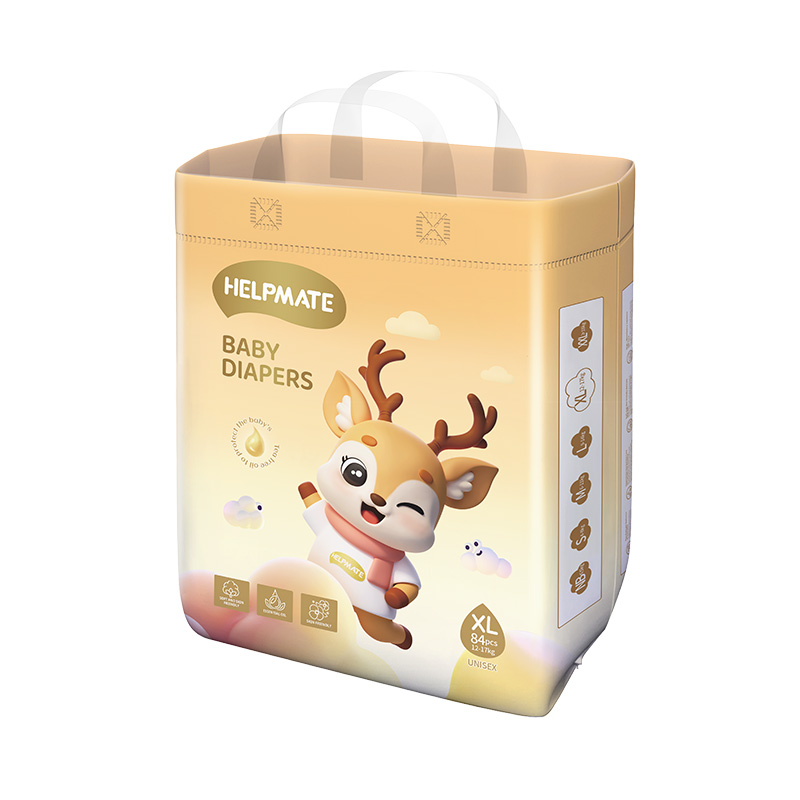
Not all large diapers perform equally. Moving up in size requires evaluating the technical specifications of the product. You must match the diaper's architecture to the child's specific anatomy and fluid output requirements.
Manufacturers cut their XXL diapers using different proprietary molds. Some brands design tall and narrow silhouettes. These work perfectly for long-torso toddlers who suffer from waistline leaks. Other brands utilize a wide and accommodating cut. These fit children with rounder bellies and thicker thighs.
Matching a toddler's specific anatomy to the correct brand architecture prevents sagging. Putting a wide-cut diaper on a narrow-hipped toddler results in drooping crotches and leg-cuff leaks. Forcing a tall, narrow diaper onto a stout child causes severe chafing at the hips. Test different brands to identify the exact geometric match for your child.
The ratio of fluff pulp to Superabsorbent Polymers (SAP) dictates performance. Fluff pulp provides structure and rapid initial absorption. SAP locks the moisture away under pressure. Larger sizes require a significantly higher SAP ratio to prevent compression leaks. A high-quality XXL diaper should contain upwards of 15 to 20 grams of SAP to handle toddler output.
Evaluate the core design. Channeled cores feature physical grooves stamped into the absorbent pad. These channels direct heavy liquid loads evenly from front to back. This prevents the diaper from swelling into a massive, heavy lump between the legs. A bulky lump alters the child's gait and pulls the waistband down.
Highly mobile toddlers generate immense friction. Walking, running, and climbing in a rigid diaper shreds the skin on the inner thighs. Toddler sweat and urine create a highly alkaline environment. When trapped against the skin by a non-breathable backsheet, this moisture breaks down the acid mantle of the skin. This leads to severe erythema and skin excoriation. Prolonged exposure to moisture in these larger sizes necessitates premium materials. You must prioritize sensitive skin diapers to prevent severe diaper dermatitis.
Look for XXL cotton touch diapers featuring hypoallergenic top sheets. The backsheet must be highly breathable to allow vapor to escape while trapping liquid. Avoid products containing harsh chemicals, chlorine bleaching, or heavy fragrances. These compounds trigger contact dermatitis when trapped against the skin for extended periods.
Active toddlers test the tensile strength of grip tabs continuously. Weak adhesives or low-quality hook-and-loop fasteners pop open during deep squats or climbing. The grip tabs must feature reinforced backing to withstand aggressive movement.
Evaluate the waistband stretch. Traditional front-fastening tapes work well, but a 360-degree stretch waistband accommodates post-meal belly expansion far better. The elastic must contract firmly enough to hold the saturated weight of the diaper without restricting abdominal breathing.
Parents often confuse sizing up with potty training. While training pants offer convenience, they serve a fundamentally different operational purpose than traditional tape-style diapers. Understanding when to deploy each solution optimizes containment.
Tape-style diapers remain superior for specific scenarios. They offer unmatched overnight containment. The adjustable tabs allow parents to cinch the waist tightly. This prevents the back-leaks common with pull-ups. For non-ambulatory children or those with special needs, tape diapers allow for easy changing while the child is lying down. You do not need to remove pants and shoes.
Traditional tape diapers for toddlers feature significantly higher absorbency limits. Manufacturers engineer pull-ups to feel more like underwear. This requires thinning out the absorbent core. If your child is a heavy wetter, tape-style remains the mandatory choice for leak prevention.
Transitioning to training pants makes sense when specific milestones are met. Potty training readiness and a strong desire for independence justify the switch. Pull-ups allow toddlers to push the garment down themselves. This facilitates toilet use.
This transition involves trade-offs. Training pants have lower absorbency capacity. You trade fluid retention for developmental benefits. Reserve training pants for daytime use during active potty training phases. Rely on tape-style diapers for sleep.
Outgrowing the largest standard sizes causes parental panic. When Size 8 or XXL fails, the retail grocery options disappear. Robust transitional options exist in the specialized market.
Youth pants bridge the gap between toddler diapers and adult sizes. Specialized medical-grade diapers offer massive absorbency for older children with nocturnal enuresis or developmental delays. Extra-large absorbent underwear provides discreet, high-capacity protection for school-aged children. This ensures dignity and dry nights.
Tape-Style Diapers vs. Pull-Up Training Pants
Feature | Tape-Style XXL | Training Pants (Pull-Ups) |
|---|---|---|
Absorbency Limit | Maximum capacity; high SAP ratio for heavy wetters. | Moderate capacity; thinner core for daytime use. |
Fit Adjustability | High; tabs allow custom tension on waist and legs. | Low; relies entirely on pre-set elastic stretch. |
Ideal Use Case | Overnight use, heavy wetters, non-ambulatory changes. | Potty training, daytime independence, active toddlers. |
Changing Logistics | Can be changed without removing pants or shoes. | Requires complete removal of lower garments. |
Procuring large sizes presents logistical challenges. Grocery store shelves dedicate minimal space to XXL sizes. They prioritize high-turnover newborn and infant sizes. Securing a reliable supply chain prevents emergency runs for ill-fitting alternatives.
Manufacturers frequently engage in unannounced design changes. A brand that fit perfectly last month might suddenly feature narrower cuts or less absorbent material. This inconsistency wreaks havoc on containment strategies.
Choosing a dedicated baby diaper supplier with transparent manufacturing standards mitigates this risk. Look for suppliers who maintain consistent sizing profiles and publish their material specifications. Reliable suppliers prioritize structural integrity over cost-cutting micro-adjustments. When evaluating a supplier, request their specification sheets. If a supplier refuses to provide technical specifications regarding SAP volume and material composition, find another vendor.
The cost trajectory of diapers is steep. Larger sizes cost more per unit because they require more raw materials. Buying small retail packs destroys household budgets rapidly.
Calculate the true cost-per-use rather than the upfront box price. High-capacity XXL diapers require fewer changes per day. This offsets their higher unit cost. Leveraging direct-to-consumer bulk suppliers provides significant economic advantages. Buying in case quantities reduces the per-unit price. It guarantees you never run out of the specific size and brand your child requires.
Key Supplier Evaluation Metrics
Inventory Stability: Do they consistently stock XXL and larger sizes without frequent backorders?
Material Transparency: Do they clearly list SAP ratios and top-sheet materials?
Shipping Reliability: Can you set up automated recurring deliveries to prevent stockouts?
Return Policies: Will they accept unopened sleeves if your child suddenly sizes up again?
Switching to a new diaper size introduces temporary vulnerabilities. Parents often make mechanical errors during the transition phase. This leads to frustration and false conclusions about the diaper's quality.
Sizing up too early causes immediate leg-cuff leaks. If the child lacks the thigh circumference to fill out the larger leg hole, fluid escapes instantly. Choosing the wrong brand shape creates structural gaps.
Mitigate this using the "two-finger test." You should be able to slide exactly two fingers under the waistband comfortably. Any looser, and the diaper will sag. Always ensure the inner leg ruffles are pulled outward. Tucked-in ruffles wick moisture directly onto the child's clothing.
Overly bulky XXL diapers impede a toddler's natural gait. Forcing the legs too far apart alters hip alignment. It causes severe inner-thigh chafing during sustained walking or running.
Mitigate mobility restriction by prioritizing ultra-thin, high-SAP core designs over traditional thick fluff pulp models. Advanced SAP cores remain incredibly thin while dry. They allow natural leg movement and only expand exactly where fluid is introduced.
Moving to XXL sizes is a mandatory operational upgrade when standard sizes fail on capacity or anatomical fit. Ignore age and weight chart recommendations if the physical indicators demand a larger chassis and higher absorbency.
Audit your current diaper fit immediately using the belly button rule and tab placement checks.
Shortlist two to three brands based strictly on your child's specific body geometry and skin sensitivity requirements.
Purchase small trial packs of these shortlisted brands to stress-test overnight capacity before committing to a bulk order.
Establish a recurring bulk order with a reliable supplier once the optimal fit is verified to lock in lower per-unit costs.
A: XXL diapers typically target the 35+ lbs (16+ kg) range. Body shape dictates fit far more than exact weight. A tall, 32-pound toddler may require an XXL for the rise length, while a shorter 38-pound child might still fit a smaller size.
A: Naming conventions vary strictly by brand. XXL often aligns with size 7 or size 8. Some manufacturers use XXL to denote specialized toddler sizing that features wider cuts or pull-up styles not found in their standard numbered line.
A: After size 8, parents must transition to youth pants, specialized overnight absorbent underwear, or pediatric incontinence products. These are designed for older children and offer massive absorbency capacities exceeding standard baby lines.
A: Toddlers with sensitive skin require unbleached, fragrance-free diapers with highly breathable backsheets. Look for products utilizing hypoallergenic cotton-touch top sheets. Avoid chlorine, lotions, and latex to prevent contact dermatitis.
A: Stop overnight leaks by sizing up to an XXL tape-style diaper with a high-capacity SAP core. Ensure the leg cuffs are flared outward, cinch the waist snugly, and limit fluid intake one hour before bedtime.
A: Yes. Purchasing directly from consumer-facing wholesale suppliers allows you to buy in case quantities. This significantly reduces the higher per-unit cost associated with larger sizes and ensures a consistent supply without relying on limited grocery store inventory.


