

Views: 0 Author: Site Editor Publish Time: 2026-09-08 Origin: Site


Standard sizing charts frequently fail parents of taller, broader, or older toddlers. This results in chronic leaks, restricted mobility, and painful skin irritation. Most sizing guides rely entirely on weight, ignoring the complex physical changes toddlers undergo as they grow. Weight-based sizing does not account for varied body compositions. Toddlers who are broader around the waist or thighs often face severe fit issues long before they reach the maximum weight limit of their current diaper size.
Older children also require higher absorbency capacities and psychological independence during delayed potty training. Moving to XXL baby pull up pants requires evaluating specific physical indicators. You must assess absorbency thresholds, structural fit, and material quality to ensure a successful transition. This guide breaks down the exact technical criteria for sizing up.
Weight vs. Build: XXL sizes typically target the 16–22 kg (35–50+ lbs) range, but waist and thigh circumference are more accurate predictors of fit than weight alone.
Navigating Overlaps: When a child falls into a weight overlap zone (e.g., 16–17 kg), active and heavier-built toddlers generally need to size up faster than long, lean toddlers.
Performance Indicators: Chronic nighttime leaks, deep red marks on the hips, and frequent blowouts in XL sizes are the primary technical indicators that an XXL upgrade is required.
Material Impact: Upgrading to soft baby pull ups in larger sizes reduces friction-induced dermatitis on thicker thighs.
Sourcing Reliability: For long-term or institutional needs, vetting a baby pull up pants supplier for consistent sizing and hypoallergenic certifications is critical to mitigating bulk-purchasing risks.
The standard industry baseline for XXL sizes typically spans 16 to 22 kilograms. Relying solely on this metric often leads to sizing failures. Manufacturers create weight overlap zones to account for different body shapes. An XL size might fit 12 to 17 kilograms, while the XXL fits 16 to 22 kilograms. This creates a decision window for parents when a child hits the 16-kilogram mark.
Deciding when to size up during this overlap depends heavily on the child's build and activity level. Weight-based charts assume a uniform distribution of mass. An active, denser toddler with thick thighs will outgrow an XL size much faster than a tall, lean toddler at the exact same weight. The denser toddler requires a wider chassis to accommodate muscle mass and movement. The leaner toddler might experience gaping leg cuffs if moved to an XXL too soon. You must evaluate the physical dimensions of the child rather than strictly following the printed weight guidelines.
To accurately determine if a child has outgrown their current size, follow these measurement steps:
Wrap a flexible tailor's tape around the child's waist just below the belly button while they are standing.
Measure the circumference of the thickest part of the thigh.
Compare these exact measurements against the manufacturer's dimensional specifications, rather than just the weight chart.
Slide one finger under the waistband of the current diaper. If you cannot do this easily without stretching the elastic to its maximum limit, the chassis is too small.
Visual and physical cues provide the most accurate data for sizing decisions. The first technical indicator of sizing failure is friction. Look for deep red indentations along the waistband or groin area after removing the diaper. These marks indicate that the elastic gathers are stretched beyond their optimal tension capacity. This restricts blood flow and causes mechanical irritation to the skin.
Mobility restriction is another major red flag. A diaper chassis that is too small limits a toddler's ability to move naturally. Watch how the child plays. If the diaper pulls down significantly in the back when they squat, or if it restricts their stride when running or climbing, the physical dimensions of the diaper are no longer sufficient.
Containment failures also signal the need for an upgrade. You must distinguish between absorbency limits and physical coverage limits. Pay attention to where and how the diaper fails:
Saturated Core Leaks: If the diaper is completely heavy and leaking through the outer shell, the child has exceeded the superabsorbent polymer capacity.
Up-the-Back Blowouts: If the diaper is mostly dry in the front but a blowout occurs up the back, the rear coverage area is too short for the child's torso.
Side Gusset Leaks: If liquid escapes through the leg holes immediately after a void, the inner leg cuffs lack the necessary height and tension to form a proper seal around thicker thighs.
Toddlers naturally carry a significant portion of their weight in the midsection. This anatomical reality frequently disrupts standard sizing expectations. Real-world sizing anomalies are common. A 33-pound toddler might require an XXL purely due to their waist circumference, even though they fall well under the maximum weight limit for smaller sizes. If the waistband rolls down or digs into the stomach, the fit is incorrect.
The construction of the waistband plays a major role here. XXL sizes utilize 360-degree elastic waistbands that distribute tension entirely differently than traditional taped diapers or smaller pull-ups. Instead of relying on two anchor points at the hips, the continuous elastic gathers provide even pressure across the entire midsection. This design accommodates broader stomachs without digging into the skin. It ensures the diaper stays anchored during heavy physical activity, preventing the garment from sagging when saturated.
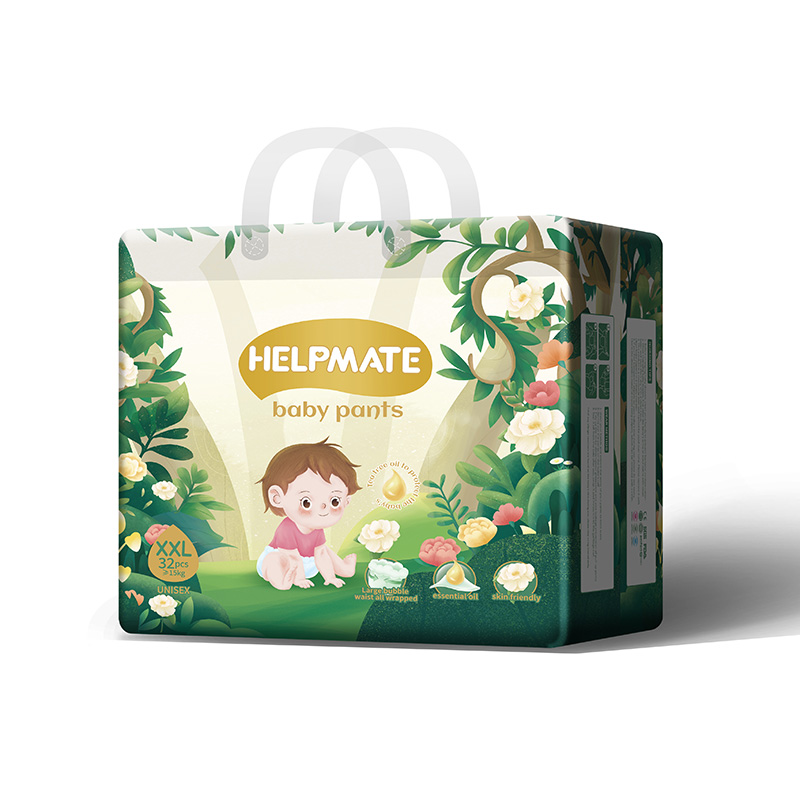
As toddlers age and gain weight, their bladder capacity increases proportionally. A diaper designed for a 12-kilogram child lacks the superabsorbent polymer (SAP) density required to handle the void volume of a 20-kilogram child. Upgrading to larger sizes ensures the absorbent core matches the physiological reality of the older toddler. The ratio of wood fluff pulp to SAP must be calibrated to absorb high-velocity voids without clumping or tearing.
The core distribution layer (CDL) becomes a primary engineering feature in these larger sizes. The CDL rapidly moves liquid away from the point of insult and distributes it across the entire length of the absorbent pad. Without a highly efficient CDL, older toddlers experience front-loading leaks. This is especially prevalent in boys, where the liquid concentrates in the front zone. A proper XXL design channels this moisture backward. It utilizes the full capacity of the diaper and prevents localized saturation that leads to sagging and eventual leakage.
The structural integrity of the side seams requires a delicate balance. Manufacturers use ultrasonic welding to bond the front and back panels. The tensile strength must be high enough to withstand aggressive pulling. Active toddlers will yank the waistband up and down repeatedly as they learn to use the toilet. If the seams are weak, the diaper will tear prematurely, resulting in wasted product. The seams must also tear cleanly and easily for parents when dealing with a soiled diaper to prevent messes from spreading down the child's legs.
Beyond physical mechanics, these garments offer psychological benefits. Transitioning to large baby pull ups helps build confidence during the potty training timeline. They mimic the feel and function of real underwear. This design shifts the child's mindset away from being passively changed by a parent toward actively managing their own bathroom habits. The ability to push the garment down independently is a major milestone in toilet training readiness.
The friction coefficient of the non-woven fabrics used in diaper construction directly impacts skin health. Standard materials often utilize stiffer fibers to maintain structural shape. While effective for containment, these stiffer fabrics create micro-abrasions against the skin during repetitive movement. When a toddler runs, the constant rubbing of a stiff leg gather against the inner thigh breaks down the skin barrier.
Larger, heavier children are significantly more susceptible to inner-thigh chafing due to increased skin-on-fabric contact and higher body mass pressing against the leg gathers. Upgrading to soft baby pull ups mitigates this risk. Premium non-woven topsheets and leg cuffs use finer denier fibers that glide against the skin rather than rubbing it. This reduction in mechanical friction prevents the onset of contact dermatitis. It keeps the highly active toddler comfortable throughout the day, reducing fussiness associated with hidden skin irritation.
Parents often debate whether to stick with large taped diapers or move to pull-ups. The trade-off centers on independence versus customizable fit. Traditional taped diapers allow for precise tension adjustments at the waist and legs. You can secure one side tighter than the other if necessary. They require the child to lie down for changes, which older toddlers often resist violently.
Use-case mapping clarifies the decision. Taped diapers remain highly effective for non-mobile children, overnight use where changes happen while the child sleeps, or children with specific special needs requiring customized fitting. Conversely, XXL pull up diapers are engineered for highly active toddlers and those actively potty training. The 360-degree stretch provides superior freedom of movement. The pull-on design eliminates the struggle of wrestling a standing toddler into a taped garment.
Confusion often arises between daytime XXL pull-ups and dedicated bedwetting underwear labeled as 6T or 7T. These are distinct product categories designed for entirely different scenarios. Daytime XXL pull-ups are built for active wear. They feature a slimmer profile to fit under clothing and contain enough SAP to handle one to two voids before a change is expected. They are designed to be changed frequently throughout the day.
Dedicated 6T/7T nighttime bedwetting underwear is designed for older children weighing between 55 and 75 pounds. These garments feature massive absorbency cores meant to hold high-volume, extended wear output over a 10-hour sleep cycle. Using bedwetting underwear for daytime potty training is inefficient. The bulk restricts movement, making it difficult for the child to run or sit comfortably. Reserve bedwetting products strictly for overnight management in older children.
Comparison of Absorbent Options for Older Toddlers
Feature | XXL Pull-Ups | Size 6/7 Taped Diapers | 6T/7T Bedwetting Underwear |
|---|---|---|---|
Primary Use Case | Active daytime wear, potty training | Non-mobile changing, customizable fit | Overnight high-volume voids |
Target Weight | 16–22 kg (35–50+ lbs) | 16+ kg (35+ lbs) | 25–34 kg (55–75 lbs) |
Fastening Style | 360-degree elastic waistband | Side adhesive/hook-and-loop tapes | 360-degree elastic waistband |
Absorbency Profile | Moderate (1-2 voids) | High (multiple voids) | Maximum (overnight capacity) |
Mobility | High freedom of movement | Moderate, can gap during heavy activity | Bulky, restricts daytime movement |
Evaluating the true cost of diapering requires looking beyond the sticker price. A common framework for calculating true cost involves measuring unit efficiency against failure rates. Cheaper units often suffer from lower SAP density or weaker leg gathers. If a cheaper pull-up requires you to change the child twice as often, the actual operational cost exceeds the initial savings.
Daily leaks require extra laundry cycles for clothing and bedding. This consumes water, electricity, and detergent, further driving up the hidden costs of budget diapers. You must balance the need for everyday affordability with the structural durability required for highly active, heavier toddlers. Investing in a mid-to-high tier product yields better cost efficiency. High-reliability units prevent blowouts, hold up to the physical stress of toddler play, and reduce the total number of units consumed per week.
Skin health becomes a major variable as children spend prolonged periods in absorbent garments. Evaluating the necessity of premium features requires looking at the child's specific dermatological history. Features like totally chlorine-free (TCF) processing, fragrance-free cores, and lotion-free topsheets eliminate common chemical irritants that trigger contact dermatitis. Volatile organic compounds (VOCs) found in some synthetic fragrances can cause severe reactions in sensitive skin.
For children with a history of eczema or chronic diaper rash, the return on investment for premium baby pull ups is immediate. Prolonged exposure to wetness combined with chemical irritants breaks down the skin barrier rapidly. Premium tiers utilize breathable backsheets that allow water vapor to escape while trapping liquid. This microclimate management keeps the skin dry, reduces bacterial growth, and prevents severe rashes that require medical creams or pediatric visits.
When transitioning to larger sizes, consistency becomes a critical factor. The primary risk when buying in bulk is size drift between different production batches. Size drift occurs when a manufacturer lacks strict quality control tolerances. This results in one batch fitting perfectly while the next batch from the same brand runs noticeably tighter or looser.
This inconsistency disrupts potty training routines and leads to unexpected leaks. Reliable manufacturers implement automated optical inspection systems on their production lines. These cameras scan every diaper moving down the line to ensure every waistband and leg gather meets exact dimensional specifications. Vetting a brand for manufacturing consistency prevents the frustration of receiving unusable bulk shipments.
For institutional buyers, daycares, or parents making long-term bulk purchases, verifying quality assurance markers is non-negotiable. You must evaluate the safety standards upheld by the manufacturer. Look for specific certifications that validate the safety of the materials used in the absorbent core and the outer shell.
OEKO-TEX Standard 100 certification ensures the final product is free from harmful levels of toxic substances. Dermatological testing certifications from independent laboratories confirm the materials will not provoke allergic reactions. When evaluating a baby pull up pants supplier, request documentation of these certifications. A transparent supplier will readily provide testing data, ensuring the products meet rigorous international safety benchmarks.
Committing to a bulk pallet or a long-term subscription carries financial risk if the product fails to perform. Mitigating this risk requires a disciplined sample testing methodology. Never purchase a three-month supply of a new brand without verifying the fit and function first.
Purchase a single retail pack to conduct a trial. Test the pull-ups over a 72-hour period. Monitor how the waistband holds up during active daytime play. Check the leg gathers for red marks after a nap. Evaluate the overnight absorbency to ensure the core can handle the child's maximum output without leaking onto the sheets. Once the retail pack passes these real-world tests, you can safely scale up to bulk purchasing.
Measure your child's waist and thighs using a flexible tailor's tape while they are standing.
Compare these specific dimensions against brand sizing charts rather than relying solely on weight guidelines.
Purchase a small retail test pack of XXL pull-ups to conduct a 72-hour trial.
Monitor overnight leak performance, daytime mobility, and check for red marks along the inner thighs.
Scale up to bulk purchasing only after verifying the fit and absorbency capacity of the specific brand.
A: Typically 16–22 kg or 35–50+ lbs. However, if your child falls into an overlapping weight zone, active or broader toddlers should size up, while long, lean toddlers may stay in a smaller size longer.
A: Look for deep red marks on the skin, frequent leaks, difficulty pulling the pants up and down independently, or the waistband sitting too low on the hips.
A: No. XXL pull-ups are designed for daytime active wear and potty training for children up to roughly 50 lbs. Size 6T/7T products are typically dedicated bedwetting underwear designed for older children weighing 55–75 lbs with high-volume overnight needs.
A: Leaks occur if the bladder volume exceeds the diaper's superabsorbent polymer capacity, or if the core distribution layer fails to channel liquid away from the front. If daytime XXL pants leak at night, transition to a dedicated overnight diaper with higher SAP density.
A: Yes. Soft pull-ups use finer denier fibers that reduce mechanical friction against the inner thighs and waist. This prevents micro-abrasions and contact dermatitis, which are common triggers for severe diaper rash in highly active toddlers.
A: Choose pull-ups if the child is highly mobile, resists lying down for changes, or is actively potty training. Choose taped diapers if you need a highly customizable fit for a non-mobile child or for specific overnight containment needs.


