

Views: 0 Author: Site Editor Publish Time: 2026-09-01 Origin: Site


The transition from passive diaper changes to active resistance marks a distinct shift in a baby’s development and daily care requirements. Caregivers often describe this phase as a physical battle. Traditional taped diapers rely on the infant remaining stationary for a secure, symmetrical fit. Once a baby begins rolling, crawling, or standing, taped diapers frequently suffer from misaligned tabs. This misalignment leads to compromised leak guards, sagging, and increased blowout risks. Determining the exact time to switch to baby pull up pants depends on observable developmental milestones and specific use cases, such as mobility management versus potty training, rather than strict age brackets. This guide evaluates the technical differences, readiness indicators, and sourcing criteria for high-quality pull-ups.
Milestones Over Age: The optimal time to introduce pull-ups is dictated by mobility (crawling, standing, walking)—typically occurring between 8 and 18 months—not a predetermined age.
Mobility vs. Potty Training: Modern pull-ups serve two distinct functions: acting as secure, 360-degree diapers for highly active babies, and serving as transitional training pants for toddlers learning bathroom independence.
Fit Mechanics Dictate Performance: The efficacy of a pull-up relies on the elasticity of its continuous waistband and the distribution of its absorbent core, which must accommodate upright movement without sagging.
Supplier Quality Matters: For bulk buyers, daycares, and retailers, partnering with a certified baby pull up pants manufacturer ensures consistent material safety, dermatological compliance, and reliable leak-guard construction.
Infant mobility completely changes the mechanical stress placed on a diaper chassis. When a baby transitions from lying flat to crawling, their pelvic angle shifts dramatically. The hips rotate forward. The legs splay outward to provide stability. Traditional diapers feature linear absorption zones designed for horizontal resting. These zones buckle under the new pelvic angle. Adhesive tabs experience severe shear stress during active crawling. Vigorous leg movements pull the front panel downward while the back panel rides up. The constant friction of knees dragging across the floor transfers kinetic energy directly into the diaper chassis. This creates immediate vulnerabilities at the leg cuffs. Caregivers quickly notice increased blowouts and leaks. The structural integrity of a taped diaper simply cannot handle continuous, alternating leg thrusts. The adhesive tapes lose their grip when exposed to sweat and constant stretching.
The symmetrical fit requirement becomes a major liability. Taped diapers demand a flat, still subject. You must align the front and back panels perfectly to create a watertight seal. A wriggly baby actively prevents this alignment. Uneven tabs create uneven tension across the waist. One leg cuff stays tight against the skin while the other hangs loose. Liquid escapes rapidly through the loose side during urination. You cannot achieve a proper seal when the foundation is crooked. The diapering process becomes an exercise in frustration.
A viable replacement must solve this specific mechanical failure. It needs rapid application mechanics. You should be able to apply it while the child stands or crawls away. It requires a self-adjusting fit. The waistband must move dynamically with the child's torso. Absorbency must match or exceed traditional options. The leg cuffs must maintain continuous contact with the skin, regardless of the leg angle. Pull-ups address these structural deficits through continuous elastic tension.
Behavioral indicators emerge clearly during this phase. Babies begin rolling over immediately upon being laid down. They kick violently during changes. They use all their strength to resist traditional diapering methods. They refuse to lie flat on the changing table. This creates a genuine safety hazard. A rolling infant can easily fall from an elevated changing surface if the caregiver is distracted by fumbling with adhesive tabs. Caregivers lose valuable time wrestling with the diaper. Frustration peaks for both the adult and the infant. The diaper changing routine becomes a stressful event that both parties dread.
You can technically use pull-ups at six months if appropriately sized. The primary benefit here is caregiver convenience. You gain speed in resolving the diapering battle. You avoid the wrestling match entirely. You simply slide the garment up the legs. Standing changes become possible during this phase if the infant can hold onto a sturdy surface. However, implementation reality presents challenges. Finding sizes small enough for this age bracket requires effort. You must verify the fit carefully. Loose leg cuffs on a small infant will cause immediate leaks. The elastic must sit flush against the thighs without leaving deep red marks on the skin.
This stage introduces entirely new mobility patterns. Babies start cruising along furniture. They take independent steps. They demonstrate the ability to stand supported for several minutes. Climbing becomes a daily activity. Falling and standing back up happens constantly. These vertical movements stress the diaper chassis differently than crawling.
This is the standard adoption phase for pull-ups. The 360-degree elastic waistband provides superior structural integrity. It resists the friction generated by walking and climbing. Continuous elastic maintains its shape despite constant vertical movement. The diaper does not sag or droop when the child stands. The leg cuffs adapt to the changing angles of a walking toddler. The entire garment functions as a cohesive unit rather than two panels taped together.
Toddlers begin showing active interest in the toilet. They stay dry for longer periods between changes. They develop the motor skills to pull garments up and down independently. They communicate their bodily needs more clearly. The focus shifts from pure containment to bathroom independence.
You must transition from high-absorbency pull-ups to specific training pants. These garments mimic real underwear. They feature thinner cores designed to catch minor accidents. They allow the toddler to feel a slight sensation of wetness. This sensation aids the learning process. As children approach age three, strategy changes. Many professionals recommend skipping pull-ups during active daytime training. You move straight to cloth underwear. You reserve pull-ups strictly as a safety net. You use them only for naps and overnight sleep.
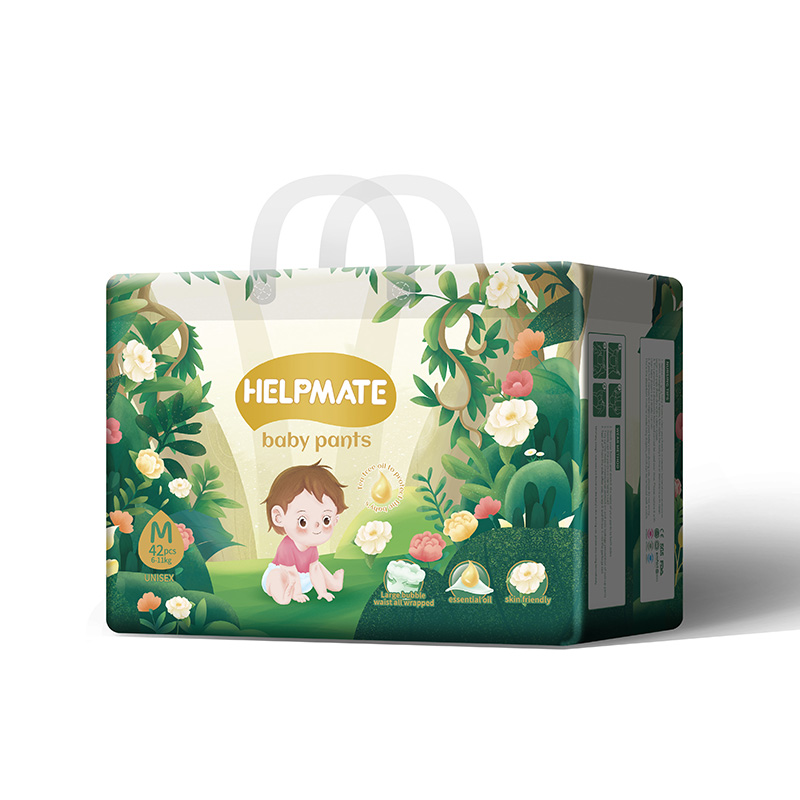
Taped diapers allow for highly customizable tension. You adjust the tabs exactly to the infant's waist. This customizable fit excels at containing liquid newborn bowel movements. The tight seal prevents upward blowouts along the back. pull up diapers utilize continuous elastic tension. They do not offer manual adjustment. Instead, they rely on the stretch of the material. This architecture proves superior for containing solid movements during high activity. The continuous band prevents the diaper from shifting out of place during play. The elastic threads woven into the waistband distribute pressure evenly across the torso.
Taped diapers offer a distinct wardrobe advantage. You can change them without fully removing the child's pants or shoes. You simply pull the pants down to the knees. This makes them highly convenient for public restrooms. It proves invaluable during cold winter weather when layers are thick. You maintain the child's warmth and hygiene easily.
Pull-ups require a different approach. Application requires the complete removal of pants and shoes. The child must step into the garment. You must pull it all the way up the legs. Caregivers must weigh this inconvenience carefully. You trade wardrobe hassle for application speed. You must decide if removing shoes is better than fighting a wriggly toddler on a changing table.
The core distribution differs significantly between styles. Traditional diapers feature a concentrated absorbent core. The material sits exactly where a lying baby needs it most. Pull-ups require a much wider distribution of Super Absorbent Polymers (SAP). Gravity pulls liquid downward when the child stands. The core must capture this liquid quickly. It must prevent gravity-induced sagging. A sagging diaper pulls the leg cuffs away from the skin, causing leaks.
Nighttime usage presents a specific implementation risk. Standard daytime pull-ups often lack total volume capacity. They cannot handle 12 hours of continuous urine output. The SAP becomes saturated. Leaks occur around the waistband. You must utilize specialized nighttime variants. These variants feature higher SAP density and thicker cores to prevent overnight failures. The ratio of fluff pulp to SAP shifts in nighttime variants to lock away larger volumes of fluid rapidly.
Diaper Style Comparison Matrix
Feature | Taped Diapers | Pull-Up Pants |
|---|---|---|
Application Method | Lying down, secure side tabs | Standing or lying, pull up legs |
Fit Customization | High (adjustable tabs) | Low (relies on elastic stretch) |
Wardrobe Removal | Partial (pants to knees) | Full (pants and shoes off) |
Mobility Support | Low (tabs can misalign) | High (360-degree stretch) |
Primary Use Case | Newborns, stationary infants | Crawlers, walkers, potty training |
Unit economics play a major role in diapering choices. Pull-ups generally carry a higher cost-per-unit than taped diapers. The manufacturing process involves greater complexity. Creating continuous elastic waistbands requires advanced machinery. Engineering tear-away sides adds production steps. You must evaluate this trade-off practically. Consider the higher cost against the time saved. Factor in the reduced frustration during daily changes. Bulk purchasing can offset some of these premium costs for institutional buyers.
Active babies generate significant friction. Constant movement rubs the inner thighs against the diaper material. soft baby pull ups must utilize premium, hypoallergenic fabrics. Non-woven materials prevent contact dermatitis. They stop severe chafing around the waist and legs. The texture must remain smooth even when saturated with liquid. Manufacturers measure this softness using GSM (Grams per Square Meter) ratings for the non-woven top sheet. A lower GSM often indicates a softer, more flexible material that moves naturally with the skin.
Airflow dictates overall skin health. Micro-porous back-sheets are an absolute requirement. These engineered sheets release internal humidity. They simultaneously trap liquid moisture inside the core. This dual-action prevents diaper rash in highly mobile toddlers. Trapped heat and sweat accelerate skin breakdown. Breathable materials mitigate this risk entirely. The Acquisition Distribution Layer (ADL) sits just beneath the top sheet. It pulls moisture away from the skin instantly and spreads it evenly across the core. This prevents localized swelling that restricts leg movement.
Removal mechanics dictate the usability of the product. High-quality pull-ups must feature robust side seams. These seams must hold firmly during rigorous activity. They cannot split when the toddler squats or climbs. However, they must tear cleanly and easily for removal. You tear the sides after a bowel movement. You never pull a soiled diaper down the child's legs. This prevents spreading waste down the thighs.
Disposal tapes represent a necessary feature. Taped diapers naturally roll up and seal using their own tabs. Pull-ups lack these front tabs. The inclusion of a rear disposal tape solves this issue. You roll the soiled pull-up tightly. You pull the rear tape over the bundle. You seal it securely. This mimics the self-containment of a traditional diaper and traps odors effectively.
Proper Removal and Disposal Sequence:
Tear both side seams starting from the top waistband down to the leg cuffs.
Hold the front panel and gently slide the diaper out from between the child's legs.
Roll the soiled diaper tightly from the front core toward the back panel.
Pull the rear disposal tape tab to extend it fully.
Wrap the tape over the rolled bundle and press firmly to seal in odors and waste.
Institutional buyers, daycares, and retailers must evaluate suppliers rigorously. A reputable baby pull up pants supplier holds relevant quality and safety certifications. Look for ISO 9001 compliance. Verify OEKO-TEX certification for textile safety. FDA registration matters depending on your regional market. These certifications ensure the absence of harsh chemicals. They guarantee no heavy metals or irritating lotions touch the infant's skin.
Quality Assurance (QA) processes separate premium suppliers from average ones. Evaluate the supplier's QA documentation. Check their SAP retention rates under pressure. Test the elastic tensile strength of the waistband. Verify the tear-seam consistency across different production batches. A reliable baby pull up pants manufacturer provides transparent testing data for all these metrics.
Supplier QA Evaluation Checklist:
Rewet Testing: Measures how much liquid surfaces back to the top sheet under pressure.
Tensile Strength Testing: Ensures the elastic waistband stretches without snapping.
Absorption Speed Testing: Clocks the exact seconds required for the core to lock away synthetic urine.
Seam Integrity Testing: Verifies the exact force required to break the tear-away sides.
Assess the supplier's production capabilities. Determine whether they offer OEM/ODM services for private labeling. Reliable bulk distribution requires massive manufacturing scale. You need a partner who can meet fluctuating demand without compromising quality. High-speed production lines must maintain strict tolerances to prevent defective batches. Evaluate their minimum order quantities (MOQs) and standard lead times. A supplier with erratic shipping schedules disrupts your inventory management.
Material sourcing directly impacts the final product. Transparency in supply chains matters deeply. Knowing where the wood pulp originates ensures sustainable practices. Understanding the SAP sourcing dictates the absorbency performance. Premium SAP absorbs liquid faster and retains it better under pressure than cheaper alternatives. Transparent sourcing reduces the environmental footprint and guarantees consistent product efficacy. Request documentation on their raw material vendors to verify their quality claims.
Sizing discrepancies cause the most immediate failures. Pull-up sizing often overlaps with taped diapers on the packaging. However, they fit entirely differently. Relying solely on weight charts leads to poor decisions. You must measure the child's waist and thighs. A pull-up that fits the waist but hangs loose on the thighs will leak instantly. Incorrect sizing leads to catastrophic blowouts during active play. Caregivers often assume a size 4 taped diaper equals a size 4 pull-up. This assumption ignores the different stretch mechanics of the two garments.
Sizing Guidelines: Weight vs. Waist Measurements
Size Category | Average Weight Range | Waist Circumference | Thigh Circumference |
|---|---|---|---|
Medium (M) | 6 - 11 kg | 38 - 48 cm | 22 - 28 cm |
Large (L) | 9 - 14 kg | 40 - 52 cm | 24 - 32 cm |
Extra Large (XL) | 12 - 17 kg | 42 - 56 cm | 26 - 36 cm |
Double Extra Large (XXL) | 15+ kg | 44 - 60 cm | 28 - 40 cm |
The transition period requires strategic planning. Many caregivers adopt a hybrid approach. They use taped diapers at home where changing tables are accessible. They send pull-ups to daycare where standing changes are more practical. This hybrid approach minimizes wardrobe hassles while maximizing convenience.
The potty training confusion presents a psychological hurdle. Modern pull-ups feature incredible absorbency. This creates the "too dry" problem. Toddlers do not feel the wetness. They fail to recognize when an accident occurs. This delays potty training progress significantly. You must switch to less absorbent training variants when active toilet learning begins. The child needs physical feedback to understand their bodily functions.
Measure the toddler's waist and thigh circumference with a flexible tape before purchasing to ensure a leak-proof seal.
Test the tear-away side seams of a new brand manually to confirm they break cleanly without excessive force.
Switch to specialized nighttime variants immediately if standard pull-ups leak during 12-hour sleep cycles.
Transition to thinner training variants the moment the child shows active interest in toilet independence.
A: Yes, if appropriately sized. The primary benefit at this age is caregiver convenience during wriggly changes rather than potty training readiness. Ensure the leg cuffs fit snugly to prevent leaks.
A: High-quality pull-ups offer comparable absorbency. However, gravity affects upright toddlers differently. They require wider SAP distribution to prevent sagging and maintain the seal around the legs.
A: Tear the side seams apart completely. Do not pull the soiled garment down the child's legs. Roll the diaper up from the front to the back and secure it with the rear disposal tape.
A: The manufacturing process is significantly more complex. Creating a 360-degree continuous elastic waistband and engineering reliable tear-away sides requires advanced machinery and specialized materials.
A: Standard daytime pull-ups may leak over a 12-hour period due to high urine volume. Use specialized nighttime pull-ups featuring higher SAP density and thicker cores for overnight use.
A: Many professionals recommend stopping daytime pull-ups around age three during active potty training. You can retain them strictly for naps and overnight safety until the child stays consistently dry.


